
The Journal of Theoretical Fimpology. Volume 1, Issue 1:e-20130316. March 18, 2013 (www.fimpology.com)
ORCID ID: https://orcid.org/0009-0005-8661-6889
About Fimpology
Fimpology is a novel discipline in the life sciences. The term "Fimpology" consists of two parts: "Fimp" and "ology". "F" represents "fetus", "I" stands for "infant", "M" is the first letter of "maternal", "P" is that of "paternal", and "ology" means a branch of scientific knowledg.
Fimpology studies the biological, ecological and evolutionary relationship among embryo, infant, mother and father from a physiological, developmental, and evolutionary perspective at different evolutionary levels, ranging from the molecular level to the individual level (see Figure 1).
Figure 1:Embryon, infant, and biological mother and father at the individual level are the major objects of study in Fimpology
Fimpology stems from the recently tremendous advantages in multi-disciplines in the life sciences, such as microbiology, developmental biology, molecular biology, evolutionary biology, microecology, zoology, botany, immunology, genetics, genomics, reproductive cytology, cellular embryology, fetology, and pediatrics (see Figure 2).
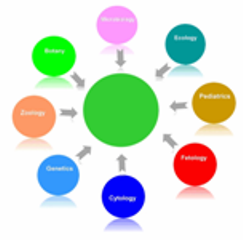
Figure 2:Fimpology is rooted in many other academic disciplines of life science
The current focus of Fimpology is on: (1) establishing a theoretical model for deciphering the interaction among fetuses, infants, the maternal body, and the paternal body from the molecular, subcellular, and cellular perspective, and (2) further advancing our knowledge in population-centric evolutionary biology into individual-centric medical science.
As Figure 1 showed, the quadruple relation of the fetus, infant, mother, and father can be resolved into the following six bidirectional relations: (1) mother and fetus, (2) mother and suckling infant, (3) fetus and infant, (4) father and fetus, (5) father and infant, and (6) father and mother.
The individual of human beings is the major target of concern in the orthodox medicine. The previously listed six bidirectional relations have more or less been studied respectively in the medical science, especially in clinical medicine. For instance, obstetrics concerns the relation between the mother and fetus, and both obstetrics and pediatrics pay attention to the relations between mother and suckling infant and between the fetus and infant. However, the medical concern on the quadruple relation is mainly from both the physiological and pathological perspective and there has been little exploration of their evolutionary significance. Furthermore, even today, there is not medical discipline focusing on the paternal relation with the fetus, infant, and mother. Given that infants are future mothers and fathers, the quadruple relation described in Figure 1 reflects its cyclic and continual characteristics, which could be recognized as an evolutionary cycle that works at the individual level.